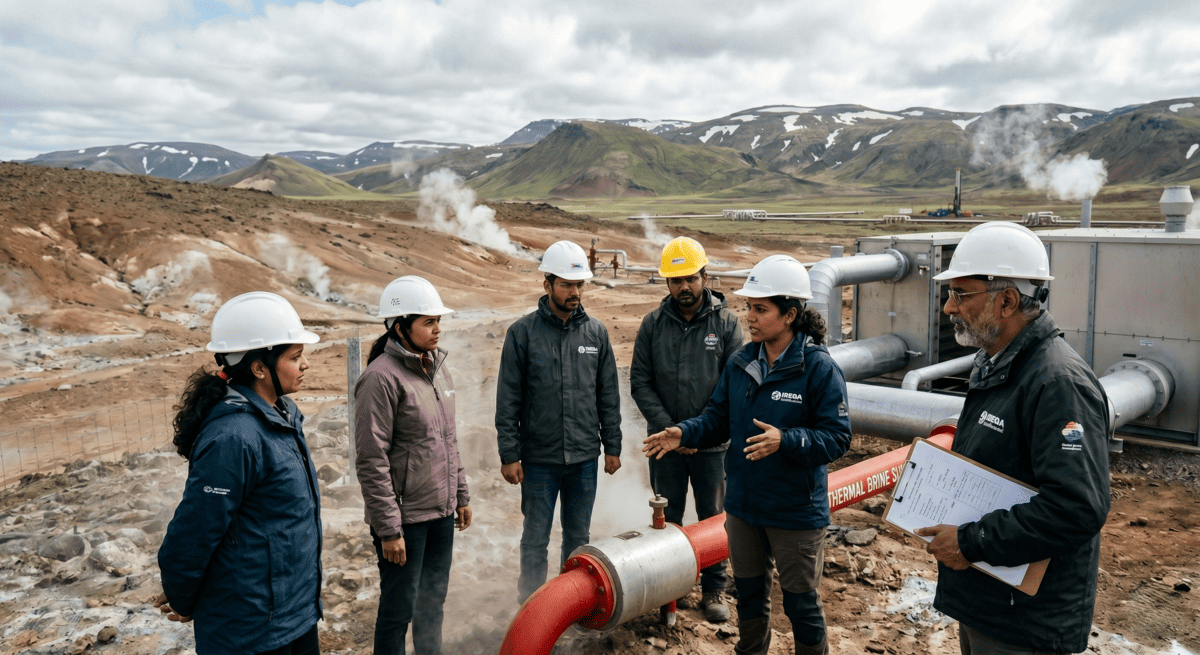
Beneath the surface of the Earth lies an almost inexhaustible reservoir of thermal energy heat generated by the planet's formation and sustained by the ongoing decay of radioactive isotopes deep within the crust. Geothermal energy taps into this vast resource to generate electricity and provide heating and cooling for buildings in a manner that is uniquely consistent, reliable and independent of weather conditions. As an often overlooked member of the renewable energy family, geothermal deserves closer examination.
How Geothermal Energy Works
Geothermal power plants access underground reservoirs of steam and hot water, typically at depths of 1 to 3 kilometres, and use this thermal energy to drive turbines connected to electricity generators. For building-scale applications, ground-source heat pumps (GSHPs) exploit the more modest but stable temperatures found just a few metres below the surface typically between 10°C and 16°C year-round to provide highly efficient heating in winter and cooling in summer. A well-designed GSHP system can deliver 3 to 5 units of heating or cooling energy for every unit of electricity consumed, making it one of the most efficient HVAC technologies available.
"The Earth's heat is patient, constant, and abundant a silent partner in the clean energy transition that has been waiting underground all along."
For large commercial buildings, hospitals and institutional campuses, ground-source heat pump systems represent a compelling opportunity to dramatically reduce HVAC energy consumption which typically accounts for 40–60% of total building energy use. When combined with solar energy for the electrical load of the heat pump, institutions can achieve near-zero-emission heating and cooling at a fraction of conventional operating costs.
Geothermal in India's Energy Landscape
While high-temperature geothermal resources in India are concentrated in specific geological zones, the low-enthalpy applications of geothermal technology particularly ground-source heat pumps are viable across a much wider geography. The stable subsurface temperatures available throughout most of India make GSHPs a practical option for institutions in both northern and southern regions. As awareness of this technology grows and installation costs continue to fall, geothermal is likely to play an increasingly important role in India's smart building energy mix.
- Ground-source heat pumps delivering 300–500% efficiency for building HVAC
- Subsurface temperatures of 10–16°C available consistently year-round across India
- Dramatic reduction in building heating and cooling energy consumption
- Seamless integration with solar-powered smart building management systems
Whether deployed as a standalone HVAC solution or integrated into a comprehensive smart building energy platform, geothermal technology offers institutions a proven, low-maintenance pathway to significantly lower energy bills and carbon emissions. The energy source has been there all along it simply requires the right technology to unlock it.